How Many Prints to Order for an Art Show, and What to Leave to Print-on-Demand
Too few prints and your bestseller sells out on day one. Too many and you drive home with boxes. Here's a simple way to size your art show order, and what to leave to print-on-demand.
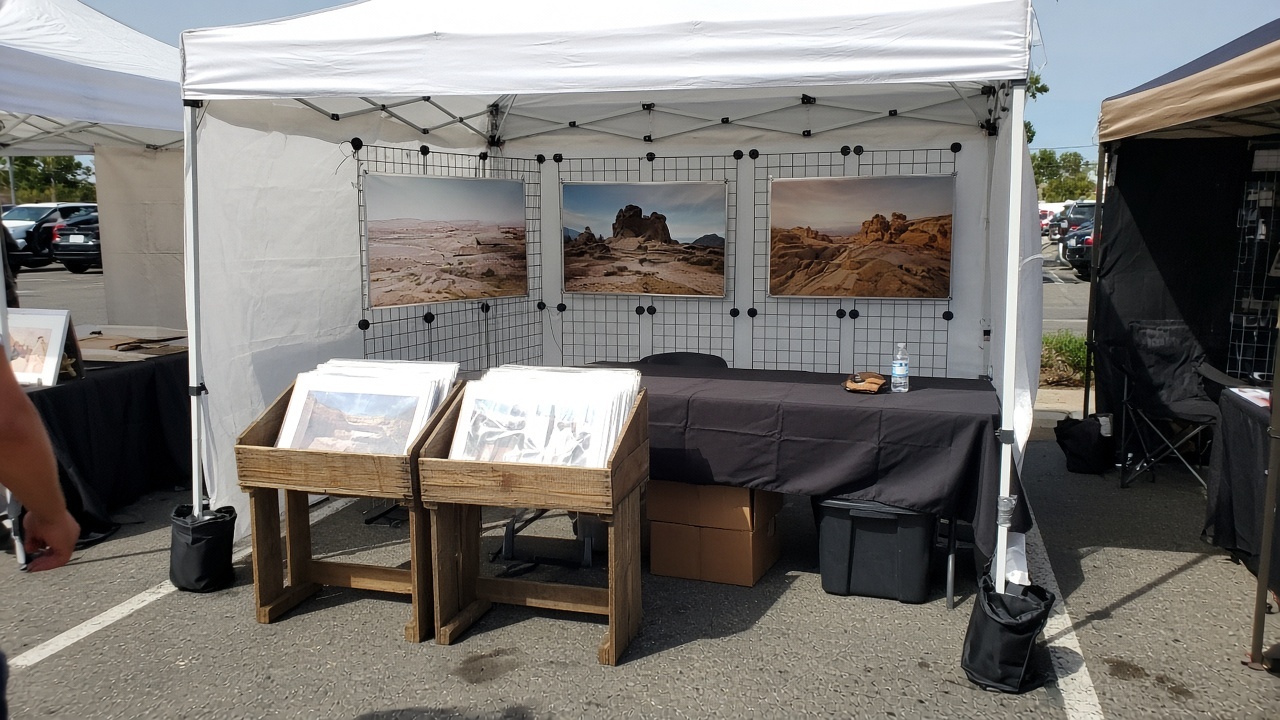
Every artist with a show on the calendar ends up asking the same thing: how many prints to order for an art show? The real worry sits on both sides of the answer. Order too few and your bestseller sells out on Saturday morning, and order too many and you drive home with boxes of the slow ones.
There's no single right number, because every show, booth and body of work is different. What you can have is a clear way to size the order, so the run you bring matches the show in front of you and print-on-demand catches the rest. Here's how we'd work it out, from your sales history to the run you order.
Start with what sold before
Your own sales history is the most reliable guide you have. Before you order, look back at what actually happened:
- Past shows. Which designs sold, in which sizes, and at which kind of show? A two-day street fair and a one-evening gallery event can tell very different stories.
- Online favorites. If you sell online, the pieces that sell most often there are good candidates for the booth.
- A small test. If a design is new, print just one or two and see how people respond. The photographer behind BermanGraphics, who has sold at more than a thousand art shows over thirty years, says digital printing made it just as easy to print one or two and test an image.1
That same photographer also warns that the pieces you think are most popular may not be the ones the public chooses, and that picking proven sellers comes from doing shows and watching what people gravitate to.1 Your records will settle that question better than a hunch.
How many prints to order: a simple way to size it
Here's a rule of thumb we suggest as a starting point, built from your own numbers. Treat the result as a first draft and adjust it with your judgment, because no method can predict exactly what a crowd will buy.
- Pick a reference show. Choose a past show that's as close as possible to this one in length, crowd and setting.
- Note what each design sold there. Work design by design and size by size, using your records.
- Adjust for show length. Scale each figure by the number of selling days at the new show compared with your reference show.
- Adjust for traffic. If the promoter's attendance figures or your own sense of the crowd point to a busier or quieter show, nudge the numbers up or down to match.
- Add a cushion only where it counts. Give your proven bestsellers a little extra, since running out of them costs the most sales, and keep new or slow designs lean.
- Check the design count. If the list keeps growing, trim it to the designs that have earned a spot. A focused selection is easier for visitors to browse and easier for you to restock.
If you have no sales history yet, start small across your strongest designs and lean on print-on-demand for anything that sells better than expected. That same photographer's advice for new exhibitors is to avoid bringing so much inventory that you can't cover your expenses even if you sell.1
Sizes and formats that work in a booth
A booth usually works with three kinds of stock: small, grab-and-go prints that visitors can carry home easily, a few large statement pieces that draw people in from the aisle, and browse bins where people can flip through unframed prints at their own pace.
Keep the size range tight. The photographer mentioned above recommends skipping adjacent sizes, offering one smaller and one larger size, because buyers who like an image tend to pick the smallest size available.1 He also reports that unframed prints in bins outsell framed work by a significant margin in his experience.1
What to leave to print-on-demand
Some things don't need to ride in the van. Big sizes, metal prints on aluminum, gallery-wrap canvas and one-off requests are all good candidates for print-on-demand, where nothing is printed until a buyer pays.2 Brakebee's print-on-demand covers gloss, satin and matte aluminum, gloss or matte photo prints, gallery-wrap canvas and giclée.2
When a visitor falls for a size or format you didn't bring, point them to your online listing. Once they order, the Phoenix lab prints, packs and ships it, usually within hours to a day.2 If you'd like to see a piece on a new surface before you list it, try a test print first.3 You can read more about selling your work online with print-on-demand on Brakebee.
Ordering your run
Once you've sized the order, order your show run from the same Phoenix lab that fulfills marketplace orders. You pick files from your catalog or upload new ones, choose quantities and substrates, and check out in your artist tools.4 The run is printed, hand-checked and packed in Phoenix so it's ready for the booth.4
- Proof first. Use the preview to check how each crop sits on the material, and order a single print of anything you haven't seen in print before.4
- Check your files. Pixel size, color and crop all show up in a run. Our file-prep guide walks through each one.5
- Leave time. Order early enough to look over your proofs, make any changes and receive the run before you pack for the show.
After the show
The show itself is your next sizing guide, so capture what happened while it's fresh.
- Track what sold. Write down sales by design and size, along with the show's length and how busy it felt. That record becomes the reference show for next time.
- Update stock as you sell. If the same piece is also listed online, update its stock the moment it sells in person, and one catalog makes that a single change.6
- Move slow designs online. A design that didn't move at the booth can keep selling as a print-on-demand listing, using the same file with no re-upload.4 Here's more on selling online between shows.
- Reorder the winners. When a design sells through, it's a strong candidate for a larger share of your next run.
Still weighing the bigger question?
If you're still deciding whether a run makes sense at all, or how much to rely on print-on-demand, our guide to bulk run or print on demand: the full comparison walks through both. For most shows, a focused run of your proven sellers plus print-on-demand for everything else keeps the booth full without filling your garage.
1 Source: How Much Inventory and Pricing When Starting Out, BermanGraphics, https://bermangraphics.com/blog/how-much-inventory-when-starting-out/
2 Source: Print-on-Demand for Artists, Brakebee, https://brakebee.com/print-on-demand
3 Source: For Artists - Prints by Brakebee, https://printsbybrakebee.com/for-artists
4 Source: Wholesale - Prints by Brakebee, https://printsbybrakebee.com/wholesale
5 Source: How to Prepare Your Files for Gallery-Quality Prints, Prints by Brakebee, https://printsbybrakebee.com/blog/how-to-prepare-your-files-for-gallery-quality-prints
6 Source: Selling Art Online and at Art Fairs: How to Make Both Work, Brakebee, https://brakebee.com/articles/selling-online-while-doing-art-fairs